Monday, December 26, 2022
Immigrants Today: Out of Many, One
Monday, October 31, 2022
Becoming Whole: Everything Sad Is Untrue
This is a heart-breaking but hopeful story of Christian conversion, fatwas, escape, divorce, a refugee camp, abuse, bullying, and isolation. Though fictionalized, it is based heavily on the author's own experiences as an immigrant to Oklahoma as a young child.
Daniel's mother converts to Christianity while visiting family in England. Upon her return to Iran, she seeks out an underground church. Inevitably, she is discovered and must flee the country. Her husband stays behind, but she takes her young daughter and son, Daniel. They hide first in the U.A.E., then stay in a refugee camp in Italy. When they finally reach America, they settle in Oklahoma, where she marries another Iranian immigrant who abuses her. Daniel struggles to understand his memories of Iran, his father's abandonment, his step-father's abuse, and his feelings of isolation in the United States.
The book is written as if Daniel is telling his story, including those of his ancestors and parents, to his school teacher and fellow students. There is a parallel drawn between Scheherazade's 1001 tales to save her life night after night and Daniel's story to breach the gulf between him and his fellow students. Scheherazade wants the king to love her, and Daniel in his way wants his classmates to love him. I think he's also using the stories to understand who he is and why he is worth loving.
The Christian faith is integral to the story. Daniel's mother risks her riches, her security, her job, and her husband when she becomes a Christian, but once she knows Christianity is True, there is no returning to her old life. Her dedication to the faith and perseverance through all her suffering is a testament to Christianity that most of us will never be able to give, and yet it's a relatively small part of the book itself. Her faith causes all of their problems, ruins Daniel's life, and yet he does not regret it. He admits all their difficulties, and the pain and sorrow he feels as a direct result, but there is no blame or ridicule. His mother is a continual source of love and goodness for him. It is pleasant to find a recent book so respectful of a Christian faith widely promoted and awarded in the publishing and bookselling industry.
Interwoven throughout the story are references to the history and myths of Iran, as well as what few memories Daniel has of his early years there. His explanations of the differences in the cultures of his home country and his adopted one show how our cultural expectations can damage relationships before they even begin, and how beneficial it is to learn about other cultures.
Parts of the book are beautifully written, but the child narrator slides often into a more vernacular language so the book is quite accessible. There are many references to food, blood, and poop.
I have read many reviews praising the audiobook, read by the author. I would love to listen to it, so I could hear the Persian names and Parsi pronounced correctly, but I'm certain I would cry through much of it. I would not recommend listening to it while driving.
The child narrator suits a middle grade reading level for the book, but parts of it are so very sad, I am not sure I would share it with my own children at that age, unless they were refugees or immigrants, or perhaps if they were encountering refugees or immigrants more in their lives. I think it might work as a historical novel for Level 4 (eighth grade) when we are studying twentieth century history. I'm going to include it as a supplemental read for our high school geography course for the Middle East, Central Asia, and India (Level 5, tenth grade). At that age, the reading level will be easy, but the subject matter will still be difficult.
I have received nothing in exchange for this post. Links to Bookshop are affiliate links. I borrowed this book from our public library.
Thursday, September 8, 2022
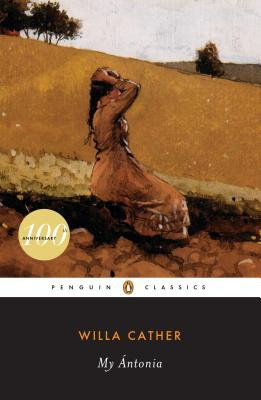
The Magnificent Plains and Her People: My Antonia
As I looked about me I felt that the grass was the country, as the water is the sea. The red of the grass made all the great prairie the colour of wine-stains, or of certain seaweeds when they are first washed up. And there was so much motion in it; the whole country seemed, somehow, to be running. (p. 12)
As we walked homeward across the fields, the sun dropped and lay like a great golden globe in the low west. While it hung there, the moon rose in the east, as big as a cart-wheel, pale silver and streaked with rose colour, thin as a bubble or a ghost-moon. For five, perhaps ten minutes, the two luminaries confronted each other across the level land, resting on opposite edges of the world. (p. 206)
She had only to stand in the orchard, to put her hand on a little crab tree and look up at the apples, to make you feel the goodness of planting and tending and harvesting at last. All the strong things of her heard came out in her body, that had been so tireless in serving generous emotions.
It was no wonder that her sons stood tall and straight. She was a rich mine of life, like the founders of early races. (pp. 226-227)
This book was even more beautiful than I remembered, and I am grateful I took the time to read it again. In the end, I let First Son choose between this book and Death Comes for the Archbishop, because by that point we knew he was considering the seminary, and he chose the other one. Which is also beautiful!
I have received nothing in exchange for this post. I received this book from another member of PaperBackSwap.com (affiliate link). Links to Bookshop are also affiliate links.
Sunday, February 2, 2020
January 2020 Book Reports
Girl in Hyacinth Blue by Susan Vreeland - This book of short stories highlights important moments in the "life" of a hidden Vermeer painting, moving backwards in time. Parts of it were lovely. (library copy)
Golden Gate by Valenti Angelo - This is a sequel to Nino. Nino travels with his mother and grandfather to join his father in California. I believe it's based on his own experiences as a child so there are some episodes that might seem jarring or inappropriate for children in today's culture. For example, Nino and his friend discover the body of a deceased Chinese man on his boat, a man they considered a friendly neighbor if not actually a friend. There are also many descriptions of Native Americans and immigrants that don't conform to modern standards. All that being said, I just love the voice of the story and the delightful illustrations. I would happily read it aloud to my children and will allow them to read it on their own. We have lots of discussions that would address anything inappropriate. (purchased copy)
Behind the Beautiful Forevers: Life, Death, and Hope in a Mumbai Undercity by Katherine Boo - link to my post (library copy)
Burmese Days by George Orwell - link to my post (copy from Paperbackswap.com
PaperBackSwap.com)
Doomsday Book by Connis Willis - The young historian, Kivrin, is mistakenly sent back to the time of the Black Death in the environs of Oxford. Her experiences illuminate the extraordinary in ordinary lives. This was my second time reading it and it was just as wonderful (and sorrowful) as the first time. (library copy)
An Introduction to the Universe: The Big Ideas of Astronomy by Brother Guy Consolmagno - link to my post (purchased from Audible)
I have received nothing for this post. All opinions are honest and my own. Links to Amazon or PaperBackSwap are affiliate links.
Thursday, August 17, 2017
Our Level 4 (8th Grade) Six Week Study on Asia
Here's how that's going to look for First Son:
- Term 1 - Mater Amabilis™ study, modified only a little to add in a few Kansas-related books. I've posted those plans in the Mater Amabilis™ facebook group for those that are interested.
- Term 2
- Term 3
- Six weeks on Russia and the Collapse of Communism, plans posted in the Mater Amabilis™ facebook group
- Six weeks on Asia - plans below

Everyone's budget hits a limit and I decided not to invest quite as heavily in this six weeks as others. Because the study is spread over a few "units" focused on different ares, I decided to find library substitutes for the Mater Amabilis™ recommended books. I have no reason to believe these are better; they were just available.
Mater Amabilis™ says history at this level should take about 45 minutes each day three times a week. In addition, a supplemental reading book should be chosen from the recommended books. I'm still deciding on our supplemental reading books.
Our Main Resources
- Kingfisher HistoryEncyclopedia, as recommended in the Mater Amabilis™ plans (I bought this used from a mom in my local homeschool group.)
- Mahatma Gandhi by Michael Nicholson (from our library)
- The Korean War (Snapshots in History) by Brian Fitzgerald (from our library)
- 10,000 Days of Thunder by Philip Caputo (from our library)
- Afghanistan (Global Hot Spots) by David Downing (from our library)
- I printed to PDF the articles linked in the plans and placed them in a binder before the term began.
- Movies or audio files I linked in a Google doc I shared with my son.
Optional Resources
- MapTrek Modern World (previously owned)
- Gandhi, the Ben Kingsley production (good for middle school and up, available at our library)
- A Statement Against the War in Vietnam by Wendell Berry, p 64-75 in The Long-Legged House (from our library)
- The Arrival by Shaun Tan (from our library)
Week 1: India
Week 2: Korea
Week 3: Vietnam (week 1 of 2)
Week 4: Vietnam (week 2 of 2)
Week 5: Afghanistan (week 1 of 2)
Week 6: Afghanistan (week 2 of 2)
Tuesday, May 30, 2017
March and April 2017 Book Reports
Anne of Green Gables by L. M. Montgomery - link to my post (my daughter's copy, purchased used at a library book sale)
The Dragon's Child: A Story of Angel Island by Laurence Yep with Dr. Kathleen S. Yep was one of First Son's books for his American history, recommended by RC History, the tale of a young Chinese boy's journey from his village to San Francisco through Angel Island. It's a nice complement to all the immigrant stories centered on Ellis Island and focusing on Chinese immigrants rather than those of Europe. First Son was in seventh grade when he read it, but it would be appropriate for younger children, too. (library copy)
The Trumpet of the Swan by E. B. White is a children's classic I had never read. Knowing my daughter's great love for all things avian, I decided we had to read it. She was delighted by this story of a swan without a voice who learns to play the trumpet. Great for all ages and the audiobook contained some actual trumpeting (of the horn, not the birds) which added to the story. (Audible audiobook)
Mansfield Park by Jane Austen centers on Fanny Price, raised by her uncle and surrounded by wealth but yet apart from it. I love reading Austen and yet am always amazed at how insightful her books are as young people discern who to marry. Fanny's strength of character withstand the arguments of those who should have had her best interests at heart but let wealth and charm delude them. It is perhaps at our peril that we disregard such concerns in our modern world. (Audible audiobook)
Good-bye Mr. Chips by James Hilton - link to my post (library copy)
Cosmas or the Love of God by Pierre de Calan, translated by Peter Hebblethwaite - link to post (interlibrary loan copy)
To Kill a Mockingbird by Harper Lee - link to my post (library copy, but I requested one from PaperBackSwap.com)
The Long Walk by Slavomir Rawicz - link to my post (library copy, but I requested one from PaperBackSwap.com)
Ember Falls by S.D. Smith is the second in the series (after The Green Ember). In it, Heather and Picket face more danger and doubt. This is a darker book than the first and leaves the fate of the rabbits much in question, but there is still hope and a third book to follow. (Audible audiobook, though my daughter received a copy for Christmas)
- Norton Anthology of English Literature Vol. 2 (sixth edition) (August 2014)
- Dead Souls by Nikolai Gogol (January 2017)
- Prayer and the Will of God by Dom Hubert van Zeller (March 2017)
- Joan of Arc by Mark Twain (April 2017, with my book club)
The italic print: Links to Amazon are affiliate links. As an affiliate with Amazon, I receive a small commission if you follow one of my links, add something to your cart, and complete the purchase (in that order).
Try Audible and Get Two Free Audiobooks - another affiliate link. Links to RC History and PaperBackSwap.com are affiliate links. Other links (like those to Bethlehem Books) are not affiliate links.
These reports are my honest opinions.
Thursday, March 9, 2017
January and February 2017 Book Reports
The Eagle of the Ninth by Rosemary Sutcliff is another novel of historical fiction set near the end of the Roman Empire's presence in Britain. This is one of First Son's books for volume 2 of Connecting with History (seventh grade). It's a tale of daring and mystery when the son of a missing Roman soldier ventures north of the wall to discover the fate of the missing Legion and recover (if possible) their Eagle. It's a good book for a middle school boy to read and contemplate the meaning of loyalty, friendship, slavery, and civilization. I haven't seen the movie, but according to the review at Common Sense Media, it's not as good as the book. (library copy)
Virginia's General by Albert Marrin is a biography of Robert E. Lee and an examination of the Civil War from the Confederate standpoint, though not always favorable to the Confederacy. First Son read this book for his American History. The chapters are well-written, but long, so First Son struggled a bit to read them. Originally he was assigned two chapters a day, but I decreased it to one a day. I appreciated greater insight into the Confederate side of the war and a favorable presentation of Lee, a distinguished man worthy of respect. (library copy)
The Innocence of Father Brown by G.K. Chesterton - link to my post. (free Kindle version)
Oh, Ranger! True Stories from our National Parks edited by Mark J. Saferstein is a collection of short essays by National Park Service rangers covering just about every aspect of life as a ranger. It's a great peek at life in national parks from historical sites to the wilderness of Alaska, but I found the writing varied in quality. The photography, however, is amazing throughout. (purchased used on Amazon)
The Chronicles of Prydain (5 volumes) by Lloyd Alexander - link to my post. (library copies, though I have since acquired three from other members at PaperBackSwap.com)
Letters from Rifka by Karen Hesse is, I think, recommended in our Connecting with History curriculum even thought it's not available at their store. It's a series of letters written by a young Russian Jew who barely escapes with her family on a daring attempt to join her older brothers in the United States in 1919. It's a good historical fiction book to read alongside a study of immigration through Ellis Island. (library copy)
Transforming Your Life through the Eucharist by John A. Kane - link to my post. (purchased from the publisher, Sophia Institute Press)
The Wright Brothers by David McCullough - link to my post. (borrowed from my dad)
The Road from Home: The Story of an Armenian Girl by David Kherdian is a fictionalized memoir of a young girl's experience of the genocide of Armenian Christians by the Turkish government and military during World War I. Mostly, the girl experiences the genocide in disease-ridden camps but there are scenes of terrible deaths and great fear, so it's not a book for young readers. I hadn't read of these events before and I think the book could be a good addition to a study of World War I to show that genocides are not the product only of Nazi Germany. It's a good book, too, to begin or continue discussions of harboring refugees from war-torn and unsafe lands. I hesitate, however, to recommend it whole-heartedly and share it with my children because I worry they will conflate the actions of Turkey in 1915 with Muslims in today's world. There's no doubt there are Muslim terrorists, but there are also Muslims in our own city who seem to be kind and generous people. With the news what it is today, I would probably wait a bit longer to share this book. (library copy)
Saint Herman of Alaska is a booklet published to celebrate the canonization of St. Herman by the Orthodox Church in America. It shows a glimpse of life for the brave missionaries of Russia who journeyed to Alaska to spread the Orthodox faith. You can read the first half of the book at the OCA website. The second half is the liturgical services, some of which you can hear on the site. There is an incident reported in the book of a martyr for the faith, someone who traveled down to California and was allegedly tortured and murdered by Jesuits. I can't say it's not true, but it's certainly not how the Jesuits behave today. (copy picked up at used book sale)
The Problem of Pain by C.S. Lewis is a short clear evangelical response to the problem of pain - that there is pain and evil in a world created by an omniscient omnipotent God. There's nothing I can say about the book that hasn't already been better written by another. I was glad to read it because it is so often referenced by others. (Kansas Dad's copy)
Books in Progress (and date started)
- Norton Anthology of English Literature Vol. 2 (sixth edition) (August 2014)
- Dead Souls by Nikolai Gogol (January 2017)
- Mansfield Park by Jane Austen (January 2017)
- The Trumpet of the Swan by E. B. White (February 2017)
- Ember Falls by S. D. Smith (February 2017)
- Anne of Green Gables by L. M. Montgomery (February 2017)
Try Audible and Get Two Free Audiobooks - another affiliate link.
Any links to RC History and PaperBackSwap.com are affiliate links.
Other links (like those to Bethlehem Books) are not affiliate links.
These reports are my honest opinions.
Monday, March 17, 2014
American History Picture Books in 2012-2013 Post 2 of 5: Progressive Era and Immigration
First of all, I forgot to mention a fun book in my last post on Slavery and the Civil War, Abe Lincoln Crosses a Creek: A Tall, Thin Tale (Introducing His Forgotten Frontier Friend) by Deborah Hopkinson with pictures by John Hendrix. We didn't read this for our study because I found it later, but it's a fun tale of Abraham Lincoln's youth, when he was saved from near-certain death by a friend. It humorously reminds us that we don't know everything about the past from the tales that come down to us. What I love most about it, though, is the thought at the end that even the actions of a child can lead to great things in the future.
Going West by Jean Van Leeuwen, illustrated by Thomas B. Allen, is a nice book about a pioneer family traveling west by covered wagon to the prairie. The weather is harsh, the neighbors are few, but the family makes a home.
Two Scarlet Songbirds: A Story of Anton Dvorak by Carole Lexa Schaefer, illustrated by Elizabeth Rosen, tells of Dvorak's visit to Iowa in 1893 and his composition of his American Quartet. It's fictionalized, but fun to read. I read this again to the children recently as part of our music appreciation. Then we listened to some of the piece on Spotify.
I put in our book basket Ten Mile Day and the Building of the Transcontinental Railroad by Mary Ann Fraser. That's a fine book, but just last year Brian Floca published Locomotive. The illustrations are stunning and the text is as much a part of the story as it tells the story. The endpapers are full of additional information on the first transcontinental railway line as well as the engine itself. I can completely understand why it won the Caldecott Medal and think it would be perfect for this kind of study. You might need to pause and finish on another day with younger children (just watch to see if their interest is lagging) because it is such a rich book.
I found two biographies of George Washington Carver I liked. I finally decided to ask the children which the wanted to hear. Based purely on the front cover, First Daughter requested A Weed Is a Flower: The Life of George Washington Carver written and illustrated by Aliki. I also really enjoyed A Man for All Seasons: The Life of George Washington Carver by Stephen Krensky, illustrated by Wil Clay. They convey similar information and are both inspiring.
When Jessie Came Across the Sea by Amy Hest, illustrated by P.J. Lynch, is one of my favorite picture books. I love it and any excuse to read it.
Journey to Ellis Island: How My Father Came to America by Carol Bierman, illustrated by Laurie McGaw, is the true story of the author's father who immigrated in 1922. It's written for older elementary or even middle school students and is full of personal stories and facts about Ellis Island, the people who passed through it, and the lives they led in America. The lovely illustrations are combined with reproductions of photographs. I put this in the book basket for the kids to look through. If I had read it aloud, I would have spread it over a few days.
Posts in This Series - I'll update this list with links to all the others after they post.
#1: Slavery and the Civil War
#2: Progressive Era and Immigration (this post)
#3: World War I, Women's Suffrage, and the 1920s
#4: The Great Depression and World War II
#5: Civil Rights, Hawai'i, Alaska, and Space Exploration
While First Son was in kindergarten, we read these books on Reconstruction, Urbanization, and Industrialization and these book on the Progressive Era. In addition, you can find links to all the picture books we read through American history in 2009-2010, when First Son was in kindergarten.
Wednesday, July 4, 2012
My Favorite Picture Books: When Jessie Came Across the Sea
When Jessie Came Across the Sea by Amy Hest, illustrated by P. J. Lynch
In the past few weeks, I've been reading through a lot of picture books on immigration and Ellis Island in search of one or two to read as a supplement to our American History studies next year. After all of them, When Jessie Came Across the Sea is still my favorite.
P. J. Lynch's illustrations are works of art, everything realistic children's books illustrations should aspire to be. The facial expressions are so endearing I find myself wanting to reach out and comfort Jessie or cry for joy with her.
Perfectly complementing the beautiful artwork is a story of perseverance, dedication and love for family. Unexpectedly, Jessie is chosen by her Rabbi to take his ticket to travel to America. She lives with the Rabbi's sister-in-law, a complete stranger who tells her to call her Cousin Kay. Jessie's life in New York City is one of work, but also learning and beauty as she goes to school and enjoys walks through Central Park. Week after week, she drops her pay into a jar. When she's ready to marry, she tells her future husband they must wait while she saves a little more money. All these years, she hasn't been saving for a dress or a house or books; she's been saving for a ticket for grandmother to join her in New York.
It's really just too lovely to miss! And, if you are very patient, you may receive a wonderful hardcover edition of the book from PaperBackSwap.com, as I did. (But not mine!)
Thursday, June 14, 2012
Reading Through American History with Picture Books
Well, I discovered that my blog records of our American history reading are rather hard to navigate, so I decided to write a post to help everyone, myself included, find them more easily.
For every time period, I was looking for living picture books. I was not particularly concerned with imparting factual knowledge like dates or big events. I wanted beautiful picture books that would delight us first and give us a feel for life in the time period second.
August and September: Pre-1600 North America - This group is mainly composed of Native American legends but also includes Columbus.
October: Colonial America through the Revolutionary War - the Mayflower, the Pilgrims, Paul Revere, Molly Pitcher, Johnny Appleseed and George Washington
November and December: Exploration, Expansion, and the Civil War - more tall tales, Sequoyah, Ox-Cart Man, the California Gold Rush, the Underground Railroad, and Abraham Lincoln
January: Reconstruction, Urbanization, and Industrialization (1865-1889) - The Statue of Liberty, immigration, and saving the buffalo
February: The Progressive Era (1890-1913) - Helen Keller, Least of All, George Washington Carver and more immigration
March: World War I and the Jazz Age (1914-1928) - The Year of the Perfect Christmas Tree, Eleanor Roosevelt, and Duke Ellington
April: The Great Depression - perseverance, family, and skyscrapers
May: Everything after the Great Depression to the present - John Steuart Curry, Art Tatum, Ella Fitzgerald, and some recommendations for later books
I spent a little time updating these posts, fixing the formatting and a few links that weren't working. I apologize to anyone who received updates in their readers for posts that are three years old.
UPDATE: Here's a link to the last post of the 2012-2013 picture books we used for First Daughter's kindergarten year. It includes links to all five of the posts.
Monday, March 1, 2010
History & Culture: The Progressive Era (1890-1913)
Stagecoach Sal by Deborah Hopkinson, illustrated by Casron Ellis. I thought First Son would love this book, as a "bad guy" features prominently, and there's even a snake. He was not all that interested, though. He and First Daughter mostly paid attention when I sang the lyrics to the folk songs (and I was pleased there was only one tune I didn't know). The illustrations are fine, but they are not really my preferred style.
Adele & Simon in America by Barbara McClintock. We have been enjoying both of the Adele and Simon books. They show the children wandering Paris or all across the United States, with Simon losing something on each page. My two love finding all the things he has lost (and some are not so easy to spot) and the illustrations are wonderful. Descriptions in the back explain each of the pictures and place the cities and places.
Helen Keller by David A. Adler is one of his early readers. I thought the story of Helen Keller would fascinate the kids, but neither of them were very impressed. I suppose they may be too young to understand the concept of deafness or blindness, especially since the closest they've come to such things would be the Signing Time videos.
Lucy's Summer written by Donald Hall, illustrated by Michael McCurdy. I love this story and Lucy's Christmas, in which Mr. Hall shares some of the stories of his mother's youth. They give a wonderful glimpse into an earlier time.
Least of All by Carol Purdy, illustrated by Tim Arnold. I've mentioned this book before and I still absolutely love it. First Son was a little more interested now that he can read himself and a little baffled, I think, at the adults in the story who cannot.
When Jessie Came Across the Sea by Amy Hest, illustrated by P.J. Lynch, is another of my favorite stories. Courageous Jessie leaves her grandmother and her tiny village to live with a woman she's never met in New York City. She works diligently for years to earn enough money to bring her grandmother to America, enjoying her new home and (presumably) not experiencing some of the terrible hardships of new immigrants. (We sometimes read about death in our picture books, or at least encounter it, but I do try to shield my little ones from too much suffering. They are still quite young for such realities.)
A Picture Book of George Washington Carver is one of David Adler's many picture book biographies, this one illustrated by Dan Brown. First Daughter was not interested at all. First Son was only mildly interested, and then really only because George Washington Carver invented peanut butter (one of his most absolutely favorite things). Even so, he announced proudly to Kansas Dad that George Washington invented peanut butter. I was a little worried about discussing race relations, but First Son just accepted it. (We'll be talking much more about race later, of course, as we read about Rosa Parks and Martin Luther King, Jr..)
My Great-Aunt Arizona by Gloria Houston, illustrated by Susan Condie Lamb, is a bright little story of a young girl's dream to see the world and how instead she taught generations of children at a local school and sent them out to the world instead. It's based on the true story of the author's great aunt. I enjoyed reading about how Arizona made a difference to her students without doing anything "great" after reading about George Washington Carver's amazing achievements.
Hattie and the Wild Waves: A Story From Brooklyn written and illustrated by Barbara Cooney is another of my favorites. The children have never been too interested in this particular book, however, and it certainly doesn't compare with Miss Rumphius. I liked including it with our history and culture books as a bit of a juxtaposition with stories like Jessie's above, as there were also some affluent immigrant families. And then, there's my thing for New York stories.
We'll be reading more about life just before the Great Depression in March. Suggestions welcome as I'm stretching what I've found so far to fill our days.
Monday, February 1, 2010
History & Culture: Reconstruction, Urbanization, and Industrialization (1865-1889)
Anna, Grandpa, and the Big Storm by Carla Stevens. My mom found this book at a thrift store and I'm always a fan of using what you have. I spread the reading over two days and enjoyed it myself quite a lot. First Son's favorite part was when they were saved by the firemen. Otherwise, he wasn't overly interested. It's too bad it didn't coincide with a big winter storm here. It would be interesting to talk about how blizzards can still bring everything to a standstill. At least we have more warning these days.
The Story of the Statue of Liberty by Betsy and Guilo Maestro was a favorite here on the Range. First Son read it himself many times (before and after I read it) and now wants to see the Statue of Liberty himself. (I'm not sure he believed me when I told him he'd seen it many times when we lived in New York. We'd often take the Staten Island ferry across and back again. It was free and offered fabulous views of Lady Liberty.)
Wagon Wheels by Barbara Brenner, illustrated by Don Bolognese. This is a wonderful little early reader following a black family moving to Kansas. The father leaves his three boys in Nicodemus and then sends a map for them to come find an even newer home. It's really wonderful, with lots of exciting stories and the love of a family, based on a true story. We loved the illustrations as well.
Klara's New World by Jeannette Winter is the story of an immigrant family from Sweden in the 1860s. I am trying to include immigration tales each month, as I feel it's an important part of American history (and current events). The kids were not very interested in this particular story, and it's not one of my favorites, either, though I can't exactly say why. Just as a warning, an infant dies on the trip over and his coffin is shown being dropped into the sea. First Son and First Daughter didn't blink an eye.
Keep the Lights Burning Abbie
Buffalo Music by Tracey Fern, illustrated by Lauren Castillo. The kids found this book in the library pile and requested it even before I'd scheduled it. Based on the true story of a Texas woman who took in buffalo calves and helped build the wild herds that remain today, it's nicely illustrated and not too preachy. We love reading about buffalo. I think First Son's favorite picture was one that showed all the buffalo skulls piled up.
Moving now into the Progressive Era!
Tuesday, October 13, 2009
Creativity and Hope
My Name Is SangoelEarly in the book, we hear of war, the death of Sangoel's father and the harsh life of a refugee (both in a camp and as an immigrant). These are heavy themes which I did not address openly with First Son. We just read the book together. He was as delighted with Sangoel's creativity as I was. I always try to preview the books I read aloud with the children, but with themes such as these, previewing is a necessity.
If you are interested in talking with your children about refugees, this book would be an excellent resource for you. Ms. Williams and Ms. Mohammed seem to have a lot of experience in working with and telling the stories of refugees and children who suffer through difficult circumstances. I intend to read through some of their other books as well.