Showing posts with label Mater Amabilis. Show all posts

Thursday, October 29, 2026

December 2025 Book Reports

Literature: Structure, Sound, and Sense by Laurence Perrine - This is the main literature textbook for Mater Amabilis Level 6 Year 2 (twelfth grade). The nice thing about this text, is that the edition doesn't much matter. It begins with elements of short stories (like plot, character, theme, point of view, symbols, irony, and humor). Then it introduces elements of poetry (denotation and connotation, imagery, figurative language, allusion, tone, rhythm, meter, sounds, patterns, etc.). The chapters across editions contain different stories and poems, but cover the same elements and themes. That means families can always find a copy at a reasonable price. (purchased used)

A Short History of the World by John M. Roberts - This is the main text for the world history strand of Mater Amabilis Levels 5 and 6 history. It covers a lot of ground, but is a solid overview of all of world history up to modern times (published in the late 1990s). The Mater Amabilis plans supplement with a lot of primary sources, as well as different texts for British history, American history, and church history. I like this approach because the students get broad brush strokes from a single author (with definite biases) with a lot of other voices all along the way. (purchased used)

History of the World Map by Map by DK and Smithsonian - The one thing I felt like the history plans were missing were maps. Some events are just easier to understand if you have a map showing movements of people and time frames. First Daughter agreed, so before her sophomore year, I added maps from this book. It has two page spreads in full color with lots of diagrams and text. It's still an overview, like A Short History of the World, but I find it really helpful to see boundaries and landmasses. I didn't write the history plans for Mater Amabilis, but I have considered adding this book as an optional supplement for others. (purchased new)

The Catholic Church through the Ages by John Vidmar - This book was recommended by a theologian for church history for high school history for Mater Amabilis. It covers all of church history in six ages from the early church through the present (2010s for the second edition). The author is a Catholic theologian, but he is fairly even-handed in his description of historical events in the church. It's quite readable and I have found my children narrate it well. The second edition is preferable because it includes a lot more information on St. John Paul II as pope. (purchased new)

Zoology: Understanding the Animal World by Donald E. Moore (a Great Courses audiobook) - I purchased this audiobook for Second Daughter to use as the spine for her zoology course, along with an apprenticeship at our local zoo. It's incorporates real stories from the National Zoo and interviews with other scientists, almost like a podcast, but goes through the fundamentals of zoology. I asked my daughter to listen and narrate each lecture. I thought it worked well. (purchased audiobook)

Orthodoxy by G. K. Chesterton - This book is assigned in Level 6 Year 2 of the religion readings for Mater Amabilis. (Are you sensing a theme for this month? Finish all the school books!) First Daughter loved Orthodoxy, so I decided to read it even though I often find Chesterton a little abrasive. (I know! Don't judge me!) Drawing on his own life and faith journey, Chesterton argues that reason supports a belief in the Christian life, opposed to the prevailing modern view that reason would deny such a belief. (Kansas Dad's ancient copy)

Ring of Bright Water by Gavin Maxwell - This was recommended as a living book for Second Daughter's zoology course. Maxwell writes lovingly of his home in Scotland and his pet otters. In the end, I didn't assign it, mostly because she had enough coursework without it, but also because there are some sad parts when the otters die or disappear. (purchased used)

The Gospel of Mark edited by Mary Healy - Some of my older kids read commentaries along with specific books of the Bible rather than the whole Bible (as Second Son is doing). This is one of the commentary series we really like, Catholic Commentary on Sacred Scripture. Each book gives the text of the Scripture followed by analysis, commentary, boxes that give context and reflections. Highly recommended. (purchased used)

A Christmas Carol by Charles Dickens - an audio recording of this novella is practically a family tradition on our drive to visit my parents every Christmas season. This year we listened to Simon Vance. (I own four different recordings!) If you have never listened to or read this story, do yourself a favor and spend a little time with Dickens himself this year! (purchased audiobook)

Goodnight Mind for Teens by Colleen E. Carney - This is a great little book to add to a high school health course, focusing on good sleep habits for teenagers. It works well to read a tip each week and spend the rest of the week practicing it. (purchased used)

I have received nothing in exchange for this post. Links to Bookshop and Amazon are affiliate links.

Wednesday, September 9, 2026

October 2025 Book Reports


Persuasion by Jane Austen - I read this with my book club. It was my third time reading it, I think, and I loved it more than ever. Anne is a woman to look up to, one who has faced disappointment and bears it quietly and bravely while responding to the nonsense of her rotten family with kindness. (I received this beautiful box set as a gift many years ago. The designs on the covers wear away if you read them, but I read them anyway.)

General Biology by Heather Ayala and Katie Rogstad - link to my post (purchased set)

Ourselves by Charlotte Mason (Home Education series volume 4) - I finished part I of Ourselves in 2021, and finally finished part II in 2025. In Mater Amabilis, we use parts of Ourselves in the high school Health course and the remainder in the high school Government and Civics courses. The book presents any of Mason's ideas about education and self-control written directly to the student. It is a little forced at times, but can be useful. One note: if you have a child or loved one who is blind, her use of blindness as a metaphor may not fit your loved one's experiences, but it is only appears in one or two places in the book. I bought this first in paperback from Living Book Press, and had some problems with pages coming out. I probably could have contacted the publisher for a refund or another copy, but instead I decided to upgrade and bought the hardcover, which is a great format.  (purchased new from the publisher)

Logic as a Liberal Art by R. E. Houser - My older daughter wanted a logic course, so I asked a colleague of my husband's for a recommendation. I read the book but didn't do all the exercises. My daughter did the ones with answers in the back. Overall, this is a good introduction to logic. It's something a motivated homeschool student can use to study independently, but it is challenging. (used my son's copy from his college class)

I have received nothing in exchange for this post. Links to Amazon and Bookshop are affiliate links.

Monday, February 23, 2026

June 2025 Book Reports


Rhetoric Alive! Senior Thesis Student Workbook by Alyssan Barnes - First Daughter used this workbook as a guide while writing her senior honors thesis. It provides a structure and a plan to tackle a large project. It's an optional resource scheduled in the Mater Amabilis lesson plans for a senior thesis. I know a lot of families in the group that don't use it, but we found it helpful. (purchased copy)

Piccadilly Jim by P. G. Wodehouse - Wodehouse is my go-to when I need something witty and fun to break up my school or serious reading. I collect them on audio because they all have narrators with lovely English accents. (purchased audiobook)

Ruth by Elizabeth Gaskell - I read this with my book club, and we had a fascinating discussion about personal responsibility, forgiveness, and mercy. It felt a little more preachy to me than I remembered from the first time I read it, but I still enjoyed it. (purchased copy)

The Secret Garden: A Graphic Novel adapted by Mariah Marsden, illustrated by Hanna Luechtefeld - The Secret Garden is one of my very favorite books of all time. I have it on audiobook and play it at night if I am feeling too anxious to sleep. I don't think a graphic novel could live up to the original, but that's probably my bias. The biographical information at the end about Frances Hodgson Burnett was interesting. (library copy)

The Enchiridion on Faith, Hope, and Love by St. Augustine - You can find this book online. I won't link to any copy because I can't tell which of the reprints are decent. I read an old copy of Kansas Dad's translated by J. F. Shaw, but I don't know if the translations differ much. It's a very good summary of the faith. We use excerpts of it in the Mater Amabilis high school religion readers, but it's not too long so I read the whole thing. (Kansas Dad's copy)

Perelandra by C. S. Lewis - link to my post about the whole trilogy (received as a gift from my brother-in-law)

I have received nothing in exchange for this post. Links to Amazon and Bookshop are affiliate links.

Wednesday, June 18, 2025

December 2024 Book Reports

The Aeneid by Vergil, translated by Sarah Ruden - I read this with my book club. I'm certain I read it back in 2019, or rather, listened to an audiobook version, because First Son was reading it that year, following the beta version of the Mater Amabilis high school English plans, but I can't find it on my blog. (Shock!) It was nice to have a refresher a year before Second Son will read it. I thought Ruden's translation was lovely and readable. The Odyssey may still be my favorite, however. (purchased copy, though I later found my son had a copy of this translation for his college Great Books class).

If you are looking for help in understanding The Aeneid, I highly recommend Elizabeth Vandiver's The Aeneid of Virgil, which also isn't on my blog but should be!

Still Alice by Lisa Genova - This novel portrays an active intelligent Harvard professor who suffers from early onset Alzheimer's disease. It's tragic but also hopeful. (from a fellow member of PaperBackSwap.com)

Strange Gods Before Me by Mother Mary Francis - I love A Right to Be Merry and was happy to see this book back in print when I had some birthday money to spend. Mother Mary Francis wrote this book in the years following Vatican II, as contemplative communities (and the whole Church) grappled with its ramifications. She writes against the "strange gods" of the modern world who distract us from our devotion to God and his will. I found this a fascinating book to be reading alongside a brief study of Vatican II with our adult ed church class and reading some of the Vatican II documents with my older daughter. Anyone discerning a religious vocation will find much to ponder in the book, especially those interested in contemplative orders. The insights into a rich spiritual life, though, are useful to anyone, not just someone in religious life. This book is worthy of its own post, but I am squeezing it in here because I'm trying to catch up! (purchased copy)

I have received nothing in exchange for this post. Links to Amazon and Bookshop are affiliate links.

Thursday, June 12, 2025

August and September 2024 Book Reports


The Great Gatsby by F. Scott Fitzgerald - I had read this book before, perhaps during my high school or college years, but I wanted to read it again before First Daughter did. It is one of the novels scheduled for English in Level 6 Year 2 (twelfth grade). It was at least as depressing as I remembered, but I found myself appreciating how it highlighted the malaise and aimlessness of the wealthy 1920s crowd. I think many of the same symptoms are still thriving in American society. I'm glad we have it scheduled. First Daughter thought all the characters are terrible, as she should. (purchased copy)

On Writing Well by William Zinsser - This is another book from the English course for the Mater Amabilis curriculum, though it's from Level 6 Year 1 (eleventh grade) and I finished it after First Daughter. I love how we have writing books scheduled for Level 6. They are good companions to the more basic writing guides we use in Level 5. (The Level 6 Year 2 book is The Office of Assertion. Zinsser's book is full of good advice the student can incorporate immediately into narrations and the longer essays assigned in the course. (PaperBackSwap.com)

The River and the Source by Margaret A. Ogola - I have seen this book recommended so many times over the years as a free geography read for Africa. For many years, it was out of print in the United States. Unlike many books available for geography, it was written by a Kenyan woman (not an American or Britain who lived in Kenya, or even a Kenyan who moved to the US or Great Britain). The author drew on stories told by her mother and grandmother about her great-grandmother. The book follows generations of the family through colonization and modernization. It's an excellent choice for a high school geography student, though given the time periods covered, a parent may want to pre-read. There are definitely some difficult topics. I was surprised at how small the printed pages are inside the book compared to the size of the book itself. I think the margins on all four sides are at least 2"! (purchased copy)

I have received nothing in exchange for this post. Links to Bookshop and Amazon are affiliate links.

Friday, January 31, 2025

February 2024 Book Reports

The Red Address Book by Sofia Lundberg - I came across this book at a library used bookstore. In this novel, an elderly Swedish woman, Doris, writes her life story in order to inspire her niece, Jenny, who is struggling in the throes of motherhood. It was an engrossing read, but ultimately not one I recommend. The woman's one true love is unreliable and untrustworthy, which always annoys me. And Doris mostly lives a selfish and self-centered life. (purchased used)

True Grit by Charles Portis - This was my book club book for February. It was such a fun read! I have a lot of questions about the reliability of Mattie Ross's account, not to mention reservations about her decisions, but thoroughly enjoyed the book. My book club chose the John Wayne version for our annual summer movie night, another fun event! (purchased copy)

O Pioneers! by Willa Cather - I love Cather's writing; I find it achingly beautiful, and love how it often reminds me of the landscapes of Illinois, my birth state, and Kansas, my current home. I am slowly collecting and reading all of her books. This novel is one of sacrifice, hard work, and tragedy. (PaperBackSwap.com)

Call the Doctor: A Country GP Between the Wars: Tales of Courage, Hardship and Hope by Ronald White-Cooper - This is a book of bits and pieces of writing by a British doctor collated and organized by his granddaughter and intermingled with letters he received from his patients. His personality shines through the candid stories. I didn't always like what he had to say, but it was honest. It's a fascinating book, a bit of primary source material, for anyone interested in British life and specifically the medical field in Britain in the interwar period (and a bit beyond). (purchased used)

Fides et Ratio by St. Pope John Paul II - This encyclical is scheduled in the Mater Amabilis lesson plans for Level 6 Year 2 (twelfth grade). I assigned it to First Daughter in eleventh grade because she had read one of the earlier ones. (We assigned some Vatican II documents her seniors year.) I love that encyclicals are included in the lesson plans. They become much less intimidating for students once they start reading them. I hope it helps them feel confident and interested enough to keep reading new ones after they go on to college. Fides et Ratio is such an important one for our times, as it discusses the relationship between faith and reason, something much misunderstood amongst many young people. (free on the Vatican website)

How to Listen to and Understand Great Music by Robert Greenberg (Great Courses audio lecture series) - link to my post (purchased audiobook)

I have received nothing in exchange for this post. Links to Amazon, Bookshop, and PaperBackSwap are affiliate links.

Friday, January 24, 2025

November 2023 Book Reports

All Hands On Deck: A Modern-Day High Seas Adventure to the Far Side of the World by Will Sofrin - I saw this at the library and thought it might be a good high school geography book. I liked how it described the discomforts, excitement, and working life of someone on an 18th century sailing ship, but I often found the author's personal life distracting. No offense to him, and it's about him on the ship, so that makes total sense. I also decided against using it or recommending it in our curriculum because there are references to drugs, romantic intimacy, swearing, and mature jokes. (library copy)

Great Myths of the World selected and retold by Padraic Colum - This book is scheduled in the Level 5 and 6 English lesson plans for Mater Amabilis (ninth, tenth, and eleventh grades). It works well in the curriculum because it gives the student a glimpse into tales from all over the world in short readings without overwhelming the lesson plans. It's a nice break from the Shakespeare, ancient epics, and Dante that dominate the first couple of years. (purchased copy)

Dracula by Bran Stoker - I read this with my book club. I had listened to the audiobook a few years earlier. (I have heard since that many authors mispronounce names in the audio versions; I don't know how my copy would compare.) I enjoyed reading it again and discussing it with my book club. (purchased copy, from my childhood, not the one linked)

I have received nothing in exchange for this post. Links to Bookshop and Amazon are affiliate links.

Wednesday, January 22, 2025

October 2023 Book Reports


Charis in the World of Wonders by Marly Youmans - This was the second time I read this book (first review here). This time I wasn't recovering from Covid and I was able to read it with my book club. I enjoyed it just as much. Charis is able to see the glory and beauty of Creation, and to feel God's loving presence, even in the midst of pain, suffering, and abandonment. I know she's not real, but she is my hero. (received as a gift)

I, Robot by Isaac Asimov - This was another re-read for me, but I hadn't read this one since I was in high school. It was thoroughly enjoyable. Writing this little review now, more than a year later, I am reminded that I wanted to read more of the robot books. Asimov is a master storyteller and a giant in the sci-fi genre. Everyone should read at least some of his books. (library copy)

Goodnight Mind: Turn Off Your Noisy Thoughts & Get a Good Night's Sleep by Colleen E. Carney, PhD, and Rachel Manber, PhD - This is a nice helpful book on the importance of sleep and the strategies for assessing your sleep and improving it. The part I remember best was the research that showed a person's impairment after a restless night is almost always not as bad as they thought it would be. I have felt so much freer when I can't fall asleep to stop worrying about it, and even sometimes to get up and read a book or watch a little show. I wanted to share it with my kids, but then I found one geared toward teens. I bought that one and my kids will read it as part of their high school Health course, but I actually haven't read it myself. I would also suggest recommending prayer to kids who can't sleep, which isn't mentioned in this book. (library copy)

I have received nothing in exchange for this post. Links to Amazon and Bookshop are affiliate links.

Monday, January 20, 2025

Music Appreciation: How to Listen To and Understand Great Music

How to Listen to and Understand Great Music by Robert Greenberg
(Great Courses audio lecture series)

This book has been recommended for many years as part of a Fine Arts credit for high school in Mater Amabilis (since the beta high school plans!).

It's a survey course in 48 lectures of all Western music with most of the focus on traditional classical music. I have generally scheduled twelve lectures each year. I recommended alternating them with weeks of listening to any of the pieces mentioned in the lectures. (We have Spotify, but you can use the library or whatever music streaming service you prefer. We even owned some of the pieces on CD.) Some of my kids listened to the whole pieces, but mostly they didn't feel it necessary. My three younger ones are all still taking piano lessons and play in a band (currently in twelfth, tenth, and eighth grades), so they are exposed to quite a bit of music in those ways as well.

Professor Greenberg is funny and only sometimes irreverent. The lectures are written for college students or adults, so there are sometimes references to more mature themes, but nothing I thought too scandalous for my high school students.

We have also really enjoyed his lectures Music as a Mirror of History.

I have received nothing in exchange for this post. Links to Amazon are affiliate links.

Wednesday, January 15, 2025

September 2023 Book Reports

Narrative of the Life of Frederick Douglass, An American Slave, written by Himself - This classic of American history is now one of our assigned books in American history. (You could also include it in civics readings.) I assign it in Level 5 Year 2 (tenth grade) in addition to the Mater Amabilis readings. (purchased used)

The Fork, the Witch, and the Worm: Tales from Alagaesia by Christopher Paolini - I'm a new Inheritance Cycle fan and had to check this book out from the library. The stories are fun little dips back into Eragon's world. (library copy)

David Copperfield by Charles Dickens - I love Dickens! David Copperfield is an orphan who seeks his own fortune, sometimes making mistakes, but always meeting interesting people, some of which turn out to better or worse friends than you might first suspect. This book is assigned in the Mater Amabilis lesson plans in Level 6 Year 1 (eleventh grade). My daughter and I both got so invested in the story we couldn't limit ourselves to the assigned readings. (purchased used) (The inked copy is not the one I own, but is probably a safe edition. Be cautious in your edition; many of the reprints are poor quality.)

Seek that Which is Above by Pope Benedict XVI - This is one of the recommended spiritual reading books for Mater Amabilis in Level 6 Year 1 (eleventh grade). It's the shortest of the recommended books and a good option for a student that wants to complete the readings at adoration. (purchased used)

I have received nothing in exchange for this post. Links to Amazon and Bookshop are affiliate links.

Monday, January 13, 2025

August 2023 Book Reports

The Netanyahus: An Account of a Minor and Ultimately Even Negligible Episode in the History of a Very Famous Family by Joshua Cohen - I read this book along with a podcast about it. The podcasters thought it was hilarious. It did have some humorous moments, but I didn't enjoy it as much as I'd hoped. (library copy)

Poverty, By America by Matthew Desmond - link to my post (purchased copy)

Jataka Tales by Ellen C. Babbitt - This is a book of tales from India that are scheduled in Mater Amabilis Level 3 Year 2 (seventh grade). I have the Yesterday's Classics edition which is a nice paperback copy with black silhouette illustrations. Overall, Second Son and I enjoyed this book of tales. I'm very pleased we added Tales to the Level 3 and Level 4 syllabi. (purchased copy)

Works of Mercy by Sally Thomas - link to my post (purchased copy)

I have received nothing in exchange for this post. Links to Amazon and Bookshop are affiliate links.

Friday, January 3, 2025

June 2023 Book Reports


Gift from the Sea by Anne Morrow Lindbergh - Our book club selection this month. Well-written, but I just couldn't feel comfortable reading about family life from a woman who had so much privilege. How lovely to have two weeks alone at the beach to contemplate your life as wife and mother! How much easier it would be for the rest of us to see the beauty in our lives if we could get away from it and have as much help as she did. I actually loved this book when I first read it, many years ago, perhaps before I had children. (purchased used)

Eric Sloane's Weather Book by Eric Sloane - link to my post (purchased new)

Lives from Plutarch (Hillside edition) - This is a great early introduction to Plutarch, suitable for middle school readers. It's part of the Mater Amabilis lesson plans for Level 4 (eighth grade), but I assign it differently, so that my student finishes it in one year. (purchased new)

Paul for Everyone: The Prison Letters by N. T. Wright - The newer edition of this book is called Ephesians, Philippians, Colossians and Philemon for Everyone. N. T. Wright is an Anglican priest and an expert on Paul. Using his own translations, he provides Scripture in short selections (but with nothing missing) and then thoughtfully reflects on them, always including a relevant story from his own life. For the most part, Wright's commentaries have nothing contrary to the Catholic faith, but it is good to have a knowledge of the major differences between Anglican and Catholic beliefs when reading, like the differences between the recognized books of the Bible and those of Jesus' immediate family. (purchased used)

Inheritance by Christopher Paolini - This is the fourth book in the Inheritance series. If you read the first three, you will probably read this one. It's a satisfying end that also leaves a lot of questions unanswered to ponder, discuss, and hope for more books. (First Daughter's purchased copy)

The Diary of a Country Priest be Georges Bernanos - First Son was reading this in Kansas Dad's class in college this year, so I decided to read it as well. This was my second time reading this book, and it was less confusing than the first time. It's a powerful argument for grace in a quiet life and the love of God, but it is a difficult read. The priest's thoughts aren't always well connected (though this makes the diary more authentic). I also often felt like I didn't understand everything the people were actually saying. I think this book is one of those that benefits from additional readings and gets better each time you read it, especially as the reader matures in years and faith. It's worth reading even if you don't understand everything. (Kansas Dad's copy)

Judges and Ruth (Ignatius Catholic Study Bible) - I read this alongside one of my high schoolers. She wanted more context than just the text, and the Ignatius Catholic Study Bible has extensive notes at the bottom of each page as well as some commentary before and within the books. I think my preferred series would be the Catholic Commentary on Sacred Scripture, but they haven't gotten to Judges or Ruth yet. (purchased new)

Never Let Me Go by Kazuo Ishiguro - In this dystopian, but not futuristic, England, children are raised merely for their organs. The question I saw woven quietly throughout the book is, "What is it to be human?" (library copy)

Delta Wedding by Eudora Welty - In this languorous novel, a young woman gets married amidst the love and chaos of her large family. I should have made a list of all the family members as they appeared, because I had trouble remembering which one was which. I loved how no matter what happened, the family members just kept right on preparing for the wedding and loving each other. (library copy)

I have not received anything in exchange for this post. Links to Amazon and Bookshop are affiliate links.

Wednesday, January 31, 2024

Conversion of the Heart and Mind: Apologia Pro Vita Sua

by St. John Henry Cardinal Newman

This book is recommended for Level 6 Year 2 in the Mater Amabilis high school religion plans (twelfth grade). It's one of the three books currently in the lesson plans of readings by modern saints. St. John Henry Newman is one of our family's patron saints, so I was excited to read this book.

St. John Henry Newman threw the English religious world into turmoil when he, a revered intellectual and leader in the Anglican church, converted to Roman Catholicism, a faith viewed with particular patriotic contempt. In the years after his conversion, Newman struggled through the loss of many friends and skepticism from many in his new faith. 

Finally, in response to a personal attack on his integrity and that of his new faith, Newman decided a thorough response was necessary, one which meant sharing the development of his faith from childhood through his rise in the Anglican church and his eventual conversion. He gathered as many of his personal letters and writings as he could and published it all in an astoundingly short amount of time. The result, through a couple of revisions, is Apologia Pro Vita Sua. The edition I read is that edited by Ian Ker, which contains much of the original content, such as the pamphlet from his most prominent accuser which prompted the book.

Newman spent years reading and praying, on the brink of converting but hesitating. His Apologia offers some explanation for his reticence.

I could not continue in this state, either in the light of duty or of reason. My difficulty was this: I had been deceived greatly once; how could I be sure that I was not deceived a second time? I thought myself right then; how was I to be certain that I was right now? ... To be certain is to know that one knows; what inward test had I, that I should not change again, after that I had become a Catholic? (p. 206)

So, like the rest of us, he decided to write a book (Essay on Doctrinal Development) and, if he felt the same way when he was done, he'd become a Catholic. 

And I hold this still: I am a Catholic by virtue of my believing in a God; and if I am asked why I believe in a God, I answer that it is because I believe in myself, for I feel it impossible to believe in my own existence (and of that fact I am quite sure) without believing also in the existence of Him, who lives as a Personal, All-seeing, All-judging Being in my conscience. (p. 182)

Newman's early years as a Catholic were difficult ones. Many of his friends and family abandoned him. Many Catholics were wary of him. His first endeavors as a Catholic ended in failure or mediocrity, but he never looked back and trusted always in the Lord who had been leading him all along.

I read the book and the appendices. I assigned the book itself to my oldest when he was a senior. He struggled at times with all the different groups of people, because Newman writes to an audience who knew all the people and all the controversies. I think there might be benefit in reading the papers and essays going back and forth in order, so you would read what others wrote and then how Newman responded, but it's hard to always sort that out in the book. (If you've read Charlotte Mason's books, you'll find the same sort of essay writing here; where the author is obviously responding to something or someone specific, but modern readers are a bit in the dark.) The Introduction of this edition of the Apologia also has some background, but I hadn't thought to assign it to my son; that might be a good idea. It's really only a problem when Newman is describing the activities of the Tractarians and the responses to his conversion. When Newman is writing about himself and his own thoughts, the book is clear.

When my son was reading it, we paused reading a few chapters in to read Joyce Sugg's John Henry Newman: Snapdragon in the Wall, which was helpful in providing Newman's basic background and some context for the Apologia. I plan to assign Sugg's book to my future kids, but it could also be a good family read-aloud.

If your high school student struggles a little with dense texts, you could assign Sugg's book and some excerpts of the Apologia. That would still provide an excellent foundation for learning about Newman's life.

A friend of mine especially loves reading St. John Henry Newman because he wrote in English. For those of us used to reading the words of saints through a translation, it's a great blessing to read such rich and beautiful prose in our own language. I thoroughly enjoyed reading this book, even if it was sometimes a challenge.

I have received nothing in exchange for this post. I purchased this book. Links to Bookshop and Amazon are affiliate links.

Thursday, September 8, 2022

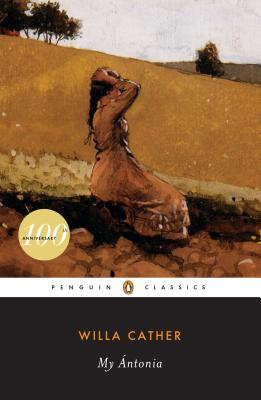
The Magnificent Plains and Her People: My Antonia


by Willa Cather

Originally, I put this book on First Son's English novels list for senior year. Because First Son started with the beta high school Mater Amabilis plans, he only had senior year for novels, so I wanted to choose only three of the six or seven recommended. (Find the current high school English plans here.) I knew I wanted this one because the language is so evocative of the ethos and environment of the Great Plains, appropriate for a Kansan homeschool.

I listened to this book on CD from the library in Boston more than twenty years ago, and loved it, so I decided I should read it again.

The narrator moves out to the Nebraska as a young boy, recently orphaned and moving in with his grandparents.
As I looked about me I felt that the grass was the country, as the water is the sea. The red of the grass made all the great prairie the colour of wine-stains, or of certain seaweeds when they are first washed up. And there was so much motion in it; the whole country seemed, somehow, to be running. (p. 12)
His life is intertwined with a Bohemian family who were on the same train. Antonia, a few years older than he, becomes his dear and life-long friend, though they are often separated. His life away from the land he loves and the people he holds dear seems odd to me, but it allows a perspective of treasured memories and homecomings.
As we walked homeward across the fields, the sun dropped and lay like a great golden globe in the low west. While it hung there, the moon rose in the east, as big as a cart-wheel, pale silver and streaked with rose colour, thin as a bubble or a ghost-moon. For five, perhaps ten minutes, the two luminaries confronted each other across the level land, resting on opposite edges of the world. (p. 206)
Life on the prairies was often difficult, and the book doesn't shirk from tragedy. If you are handing this book to a student without reading it, you should be aware there is a suicide. You may also wish to pre-read the story of Peter and Pavel (in chapter VIII of Book I, The Shimerdas).

She had only to stand in the orchard, to put her hand on a little crab tree and look up at the apples, to make you feel the goodness of planting and tending and harvesting at last. All the strong things of her heard came out in her body, that had been so tireless in serving generous emotions.

It was no wonder that her sons stood tall and straight. She was a rich mine of life, like the founders of early races. (pp. 226-227)

 This book was even more beautiful than I remembered, and I am grateful I took the time to read it again. In the end, I let First Son choose between this book and Death Comes for the Archbishop, because by that point we knew he was considering the seminary, and he chose the other one. Which is also beautiful!

I have received nothing in exchange for this post. I received this book from another member of PaperBackSwap.com (affiliate link). Links to Bookshop are also affiliate links.

Thursday, July 14, 2022

Difficult Primary Source Reading: Woman and the New Race

Woman and the New Race

by Margaret Sanger

This book is included in the primary source reading in the Mater Amabilis high school history plans for Level 6 year 1. It should be clear that the faithful Catholics who collected the list of resources for our history plans do not agree with Margaret Sanger's views, but they did feel it important for students to read her actual words and grapple with them. 

I printed this short book for our history binder from the Bartleby website. It came to about 80 pages, single spaced, which is too long for a single day's history assignment. I did not read it ahead of my son, so I just asked him to read for thirty minutes, then narrate what he'd read. After reading it myself, I decided on some chapters to assign for my future students.

I'm going to assign (for a single day's reading) chapters I-VI, XIV, and XVIII. The other chapters will be optional. (My second child might read them, though I'm not sure any of the others will be interested enough.) These chapters are:

I. Woman's Error and Her Debt, pp. 3-5

II. Woman's Struggle for Freedom, pp. 6-12

III. The Materials of the New Race, pp. 13-17

IV. Two Classes of Women, pp. 18-20

XIV. Woman and the New Morality, pp. 59-64

XVIII. The Goal, pp. 79-81 

Chapter XIV (Woman and the New Morality) includes references to the Catholic Church's view of marital intimacy. Though her description of the baptismal rite is not strictly correct, the idea that the marital act itself was somehow tainted, even within marriage, was indeed widely believed within the church. Pope St. John Paul II's Theology of the Body was a turning point in our understanding. It is essential for students to be introduced to these ideas before encountering arguments like Sanger's in college and the wider world. Though they may not be able to convince their friends, they should be armed with such knowledge for their own soul's protection.

I also made a note at the beginning of the reading reminding my student medical knowledge has grown since 1920, when Margaret Sanger wrote this book. A familiarity with the reproductive system is recommended and should be addressed before a student graduates from high school, at the very least.

Most of Sanger's proponents today would explicitly disavow her eugenic arguments, but there are real struggles in the world she was attempting to address. I think it's important to recognize and acknowledge those. These sorts of primary readings are therefore essential.

I have received nothing in exchange for this post. This text of this book is in the public domain.

Wednesday, June 22, 2022

Preparing for College Writing: The Office of Assertion

by Scott F. Crider

This book is recommended in our Mater Amabilis high school English course (Level 6 Year 2, twelfth grade). First Son's English courses were a combination of the new plans and the old beta plans, so I spent a lot of time debating his options for senior year. I didn't want him to miss all of the great books and resources, but because he was going to take a college writing course, he didn't have time for everything that was left.

I decided to take a chance on this book and scheduled it for First Son. I really don't know how much it helped him; he's a fine writer, though a bit too succinct for my own taste. I think it's an excellent book, though, and I'm already looking forward to First Daughter reading it in a few years.

There book consists of six chapters, an example student essay, and a couple of other helpful appendices. The Mater Amabilis lesson plans cover it in nine assignments (once a week). I assigned it to First Son in the first term, along with some Shakespeare and novels I wanted him to read. (I gave him a semester's credit of English for this book and the plays and novels, then a year's credit for the college writing course he took in the spring.) The example student essay is about Telemachus and the Odyssey, which Mater Amabilis students will especially appreciate if they read it in Level 5.

Dr. Crider covers everything about crafting an essay - forming an argument, organizing the essay's structure, stylistic choices, revising, and critiquing. Most of these topics should be somewhat familiar to a Level 6 student (eleventh or twelfth grade), but The Office of Assertion pulls it all together clearly and succinctly. He includes examples throughout from masterpieces of rhetoric like the Declaration of Independence and Samuel Johnson's "Preface to Shakespeare."

All liberal arts, in both the sciences and the humanities, are animated by the fundamental human desire to know, the fulfillment of which is a good, even if it provides no economic or political benefit whatsoever. An education for economic productivity and political utility alone is an education for slaves, but an education for finding, collecting, and communicating reality is an education for free people, people free to know what is so. (pp. 122-123, emphasis of the author)

This book is an excellent part of our high school plans. It fits well in the senior year, when students are likely more proactive in improving their writing and when it will remain fresh in their minds as they begin college coursework.

I have received nothing in exchange for this post. Links to Amazon and Bookshop are affiliate links. I purchased my copy new from Amazon.

Friday, June 10, 2022

Cultivation and Craft in Japan: Water, Wood and Wild Things

Water, Wood, and Wild Things by Hannah Kirshner

by Hannah Kirshner

I found this book on the new books shelf of our library. I grab a lot of books from those shelves, but most I quickly set aside. As I read this book, I soon realized it would be a wonderful book for our high school geography course. Our geography courses are found at Mater Amabilis and are all in two parts. In one part, the student reads a narrative text (excerpts from one of Charlotte Mason's books), completes some mapwork, and reads current articles on the area. In the other part, the student reads two or three books that immerse them in the region. These can be fiction or nonfiction, travelogues or memoirs. We have tried to curate a robust list for each course to give families many options to fit their time, budget, and a student's interests. Many of the books are wonderful books, but they just happen to be the handful our moderators and members have come across and recommended. There is really a single best book.

This book is one of those books. It doesn't just serve the purpose; it's possibly one of the best possible books a Charlotte Mason inclined student could read about life in Japan. I almost can't recommend it highly enough.

Hannah Kirshner moves to Japan in order to humbly learn from some of the most accomplished artists and artisans in Yamanaka. She begins by learning the secrets of sake, but intentionally immerses herself in the community because she recognizes the wisdom and craftsmanship of the people around her. The book tells in chapter after chapter how she is befriended by someone of great knowledge who then invites her into that knowledge, one apprenticeship after another.

She is invited to observe saka-ami hunting, a traditional form of hunting geese with thrown nets open only to men. For a winter season, she regularly goes to the club house and shadows the hunters, an outsider, but a generally welcomed one.

For the darkest months of the year, when I usually feel melancholy and reluctant to go outside, I spent evenings watching the sunset at the edge of the duck pond and days in anticipation of what the next hunt would bring. I noticed the landscape change day to day as the camellias bloomed and dropped their flowers and the long sasa leaves dried to look like goose feathers scattered on the trail. I learned to track the direction and strength of the wind. As light faded from the sky, I meditated on the sound of beating wings. (p. 211)

She accompanies an artist, Mika, to gather ganpi from which a traditional paper is created. After five years of study, Mika is still learning how to properly identify the plants she desires.

While she transforms the fiber into paper with the alchemy of water, ganpi is growing in the mountains for next year's harvest. Its silky oval leaves open in late spring, and in early summer its pale yellow flowers bloom; when autumn frost arrives, the leaves drop and the shrubs go dormant until spring. I have everything I need, Mika says, to make my art: sunlight, water, and ganpi. (p. 227; italics by the author)

In five lovely paragraphs (on pp. 256-257), Ms. Kirshner describes her childhood farm:

Some years, button mushrooms emerged in the part of the pasture grazed by our sheep. In the way-back, where the grass grew tall enough for a small child or resting deer to hide, there were blackberries in late summer that stained my lips, hands, and clothes. Garter snakes coiled on the thorny branches to soak up the sun.

Find the book and read them all. It's the kind of childhood homeschool moms all dream to give their children, though few of us are probably as successful as we dream. (Though she does say, "Much of our five-acre farm was uncultivated meadow," and I can happily affirm that much of our seven acres is also uncultivated...something.) It is her quest to become intimately acquainted with the wild world of Japan that has led Ms. Kirshner on so many of her adventures. 

The mountains that day were a thousand colors of green, from the nearly white shimmer of new leaves to the deep blue green of sugi and Noto hiba cypress, all luminous under an overcast sky. They stay that way--infinitely varied--only for a few days, and then the deciduous trees gradually darken into a more uniform green until the cold snap of autumn nights sets them alight in famously fiery hues. (pp. 262-263)

The author presents herself to the people of Japan as someone eager to learn because she respects who they are and recognizes the value their communities and skills bring to Japan and to the world. She is profoundly respectful of Japanese people and culture, which I am eager for my children to emulate.

The text is interspersed with drawings, maps, and recipes. It's a delight to read. 

I have received nothing in exchange for this post. Links to Amazon.com and Bookshop.org are affiliate links. I checked this book out from the library.

Wednesday, June 8, 2022

First Son, the High School Graduate

I have posted about our children less often over the years, a combination of respecting their privacy more as they grew into their teen years and taking fewer pictures as I got busier with managing life overall. But we have big news, worthy of a picture and a post!

We celebrated our first graduation in May! First Son received a diploma with an Oreo for an official seal. He said he wanted Oreos instead of a diploma, so he also received a little package of Oreos courtesy of a dear friend who has been like a second mother to him. 

We had an amazing graduation party, shared with one of his best friends. They printed out pictures of them together, including First Communion, Confirmation, and one at the graduation mass hosted by our parish. My heart just about burst. I attended school in a dozen different school systems before graduating high school. I can hardly believe my oldest, though he moved three times before he started school, has so many memories with the same group of young men.


Everyone wants to know, what is he going to do next? So did we! Until just a few weeks ago, nothing was official. This respectable looking young man will be attending our diocesan seminary in the fall.

After driving all over Iowa, Illinois, Indiana, and Nebraska last summer, and applying to a dozen colleges in October (Yay! We're all done, I thought), First Son announced in late January that he wanted to apply to the seminary. Reader, February is very late in the year to be starting a seminary application. There are lots of pieces that have to be completed in a particular order. Our vocations director was helpful and encouraging and we got most of it done enough to be sure of his own preference before he had to turn down scholarship offers by the end of April. (Also, in case you didn't know, it's worth asking what the deadline really is. His second choice college said they would hold his scholarship offers through the early summer in case he discerned he wasn't supposed to be in the seminary.)

There's a lot to say about all the prayers and discernment for the last few months, but most of it is more private than this blog. I'm happy to chat privately, if anyone has questions.

A bit about how I feel about Charlotte Mason's philosophy, now that we've graduated a student:

When the vocations director came for dinner and told us about the House of Formation, how the young men study, pray, and work together, I asked him whether he knew about Charlotte Mason, because at the House of Formation, "Education is an atmosphere, a discipline, and a life."

In the past few years, our son has read much he appreciated and enjoyed that he never would have picked up if it hadn't been assigned. (Dante, I'm looking at you.) Mater Amabilis is not designed to shape young men for the priesthood, but it gives a great foundation for those that discern a call. And while our young man may or may not be ordained a priest in 8-9 years, I'm proud of him for listening to God and asking if this is his way.

Mater Amabilis is a great blessing. Charlotte Mason's philosophy of education is a way of forming the whole person. I'm so happy we were able to live this life with him for thirteen years of formal-ish education.

Wednesday, June 9, 2021

Our Last Epics: The Divine Comedy

by Dante Alighieri, translated by John Ciardi

The Divine Comedy was scheduled in Level 6 year 1 (eleventh grade) in the beta Mater Amabilis high school plans. The new plans moved it to tenth, but I wanted First Son to read it so I scheduled it this past year for him. He read two cantos a day, twice a week, finishing each book in a term (with an extra day or two for introductions and an exam). It was far and away his favorite lesson, even though outside of his "epics," he claims to detest poetry. 

My favorite book was The Inferno. It's possible one of my younger children will not be prompt enough in lessons to fit quite as much reading in the day as First Son. I may consider only assigning The Inferno or possibly also The Purgatorio without The Paradiso.

We used the Memoria Press student guide and teacher guide for our discussions. Before reading, he would look through the vocabulary in the student guide. After reading, he would narrate the text (and translator's notes), usually in a written narration, and then we'd just read through the questions together. I did not use any of the quizzes or texts. I think the translator notes were extensive enough that the student guide could be skipped, even if you wanted to use the teacher guide to give some question prompts for a discussion. We did frequently talk about how Dante was not a theologian; his ideas about hell, purgatory, and heaven are not Catholic doctrine, and often differ quite a lot from what the Church teaches today.

I have no complaints about John Ciardi's translation. I enjoyed his poetry and appreciated all of his explanations of nuances in the text. His translation notes were helpful as well. Though this book is big because it contains all three books, it is an inexpensive option. A friend, who happens to love reading Dante, told me the Anthony Esolen translations are his new favorite. You may want to compare the translations of a few verses or cantos before choosing. It would be a slight disadvantage to have to buy three different books (Inferno, Purgatory, Paradise) for the Esolen translation, but it's best to choose the one you'll enjoy the most, if you can.

If you search online, you can find many free resources, videos, and lectures on The Divine Comedy (including some by Anthony Esolen), but they're not necessary. There's plenty to enjoy in just reading the books!

First Son has read from Epics for three years: the Odyssey, the Aeneid, the Iliad, Paradise Lost, and The Divine Comedy. He has enjoyed them all immensely. 

I have received nothing in exchange for this review. Links to Amazon and Bookshop are affiliate links. I purchased this book.

Monday, April 19, 2021

Little Leap Forward


by Guo Yue and Clare Farrow
illustrated by Helen Cann

This is a beautifully written book about Little Leap Forward, a young boy in Beijing in 1966. He tells of his family, his hopes and dreams, and the ways his life is impacted by the arrival of the Red Guards and the Cultural Revolution. The author drew on his own life and experiences to create a real picture for the reader. The many illustrations are like full-page watercolor paintings.

It would be perfect as a substitute for a book in Level 1A Year 2 of Mater Amabilis, when studying Asia for People and Places. I think it's not quite as sad as Water Buffalo Days, which is a little hard to read to the end, even thought it's a wonderful book. You can read about the books listed in the syllabus in this post.

I have received nothing in exchange for this post. Links to Bookshop and Amazon are affiliate links. I checked this book out from our library.